Producto
Logo Control

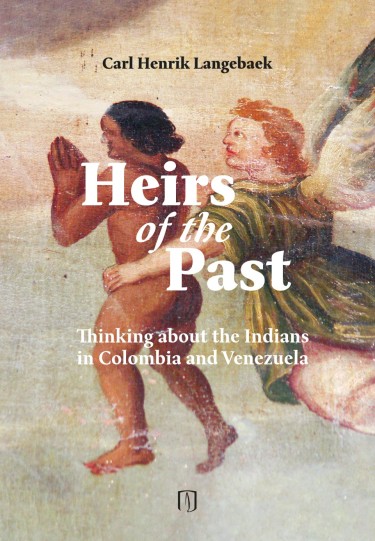
Heirs of the Past

Thinking about the Indians in Colombia and Venezuela

Disponibilidad de la publicación

A la venta en este portal

eBook (PDF) ISBN 9786287903258
$ 100.000
Impreso ISBN 9786287903272
PRÓXIMAMENTE
$ 200.000
Impreso bajo demanda ISBN 9786287903258
$ 190.653
¿Eres egresado de Uniandes? Con tu beneficio de egresado pagas $ 170.000 el impreso (-15%), $ 162.055 el impreso bajo demanda (-15%) y $ 85.000 el ebook (-15%). Inicia sesión o regístrate.

Debes seleccionar al menos un formato

Especificaciones por formato:

Impreso

    Estado de la publicación: Activo
    Año de edición:2026
    Idioma:Inglés
    ISBN-13:9786287903272
    DOI:Enlace
    Páginas: 825
    Tamaño(cm):17 x 24
    Peso (kg):0.22 kg
    SKU (Número de Referencia):434586

E-book (PDF)

    Estado de la publicación: Activo
    Año de edición:2026
    Idioma:Ingles
    ISBN:9786287903258
    DOI:Enlace

E-book (EPUB)

    Estado de la publicación: Inactivo
    Año de edición:2026
    Idioma:Ingles
    ISBN:9786287903241
    DOI:Enlace

Impreso bajo demanda

    Estado de la publicación:Activo
    Año de edición:2026
    Idioma:Inglés
    ISBN-13:9786287903258
    Páginas: 825
    Tamaño(cm):17 x 24
    Peso (kg):0.22 kg
Cómo citar

Los eBooks comprados en este catálogo editorial se acceden mediante vista en línea dentro de este mismo entorno, o, para vista fuera de línea, a través de Scholar App (PC/Mac) y Mōn'k App (iOS/Android). El usuario final no recibirá archivo PDF o EPUB ni por correo ni por descarga.

“The opulent illustrations in Heirs of the Past gleam with the beauties of pre-Hispanic art. The engravings evoke the early revelations of Colombian archaeology and ethnography, yet, unlike other flashy compendiums, the magnum opus of anthropologist Carl Henrik Langebaek reaches startling conclusions: ‘The good Indian is […] an image just as efficient, or more so, for colonial purposes than that of the savage, cannibalistic Indian.’ This work, sparkling and singular, is not another portrait of Indigenous America, but rather a self-portrait of intellectual America seen through its successive concepts of diversity. This novel interpretation of Creolism reveals the fecundity of tropical thought while highlighting weaknesses hidden within its foundation.”

—Frank Salomon, John V. Murra Professor Emeritus of Anthropology, 

University of Wisconsin-Madison

Heirs of the Past provides a historical trace of how the Creole elites of Colombia and Venezuela appropriated the Indigenous figure and their history. The journey along its pages begins with the depictions of Indigenous peoples during the Spanish Conquest and follows the birth of a powerful idea: that the pre-Hispanic past belonged to the descendants of the conquerors. This evolution culminates in the moment Creoles began referring to “our Indians.”

Langebaek proposes a provocative thesis: the idealized image of the Indigenous person does not actually reflect the native population, but rather the Creole who uses the native as a mirror to represent themselves—particularly when facing the gaze of the foreigner. The book also reflects on the relationship between European and North American thought regarding the inhabitants of the tropics. While the responses from Creole intellectuals are presented as rich and complex, the author challenges their claims of being “original” or “liberating.” Instead, he argues that claiming the Indigenous as “ours” serves a colonial purpose. In other words, a positive view of the Indigenous person is not an act of generosity or recognition; it is a fundamental tool in an ideology of domination.


Carl Henrik Langebaek Rueda

Carl Henrik Langebaek is an anthropologist graduated from Universidad de los Andes (Colombia) and holds both an MA and a PhD in Anthropology from the University of Pittsburgh. He is currently a Full Professor in the Department of Anthropology at Universidad de los Andes. Throughout his distinguished career at the same institution, he has served as Chair of the Department of Anthropology, Dean of the Faculty of Social Sciences, Vice President for Research, and Academic Vice President. He was summer fellow at Dumbarton Oaks, Harvard University, and has been invited as lecturer at the British Museum, and as the 38th Annual Lecturer at the McDonald Institute for Archaeological Research, Cambridge University. In 1998, he was awarded the Alejandro Ángel Escobar Prize in Social and Human Sciences for the first edition of this book. He has authored numerous books and articles on pre-Hispanic societies. Beyond his university roles, he has served as the Head of the Social Sciences Program at Colciencias and has been a member of the Superior Council of Universidad Nacional de Colombia, the Universidad Central, the National Accreditation Council, and the Superior Council of the school Gimnasio Moderno in Bogotá.


Jimmy Weiskopf


Acknowledgments — p. 11Introduction — p. 13Criollismo and indigenism — p. 15The interpretation of cultural history — p. 27The geographical and chronological ambit — p. 30From Conquest to Independence — p. 35The modelo venerable and America — p. 35They were people who then flourished — p. 51Borrowed clothing and jewelry — p. 58The best and main part of the New World — p. 61The baroque indio and the king — p. 67The indio in Christmas and Purgatory — p. 72End of the abominable sodomites — p. 82Visiting towns — p. 91True testimonies of what people were like — p. 95Giants, indios or animals? — p. 100Civilization, the past and the debate about America — p. 107Worse than the natives themselves — p. 115God and the degeneration of America — p. 124Mutis and Humboldt: Enlightened Europeans in Nueva Granada — p. 139The European Enlightenment in Venezuela and the savage — p. 148The criollos and the ancient indios — p. 151The Venezuelan criollo and the horrible images of his fatherland — p. 175The origin of the good and simple Americans — p. 178To die beneath the walls of Mexico City, Cuzco or Bogotá — p. 185Ferdinand VII, king of the people of Cundinamarca — p. 204HEIRS OF THE PASTThe 19th Century: Races — p. 213The remains of the shipwreck — p. 213Romanticism and civilization — p. 225Romanticism and barbarianism — p. 238Science and Romanticism: Languages and monuments — p. 243Romanticism and law — p. 251Praise of the racial mixtures — p. 258The brilliant destiny of the indios — p. 267The monster with fifteen heads — p. 272No more stale and contradictory ideas — p. 281Venezuela: Races, climate and evolution — p. 293The enormous influence of our ancestors — p. 299Everything was race in the past — p. 303Politics and the past: Isaacs and Caro — p. 312Race struggles — p. 322Following the traces of civilization in Venezuela — p. 331Caught in a state of full savagery — p. 334Darwin or Lamarck? — p. 338Empire, science and indios — p. 344The past is underground — p. 352The 20th Century: From Race to Praising Diversity — p. 365Race and education between the 19th and 20th centuries — p. 365Mixing: Africanism and the poor indio breed — p. 368Indios and latinos — p. 375Civilization and mestizaje in Venezuela — p. 378Civilization and mestizaje in Colombia — p. 384Two English gentlemen and imperialism — p. 391You are a superior race — p. 401Is the race degenerating? — p. 417The autochthonous and the fight against imperialism — p. 436Caribe, mestizo and Muisca aesthetics — p. 444Reason or emotion? — p. 458The immigrant, the colonist and the problem with race — p. 468The indios and the Yellow peril — p. 476The birth of the experts — p. 484The ethnographic State — p. 493The ambiguity of difference — p. 508The past neutralized — p. 525Redemptive ethnology — p. 537

Recomendaciones para ti